Although the country is only now ostensibly reckoning with its well-documented history of systemic racism and state-sanctioned violence, the past seven years since the inception of the Black Lives Matter movement have been especially punctuated by stories of the injustices levied against Black Americans. The ongoing conversation has evolved in its sense of urgency after the killings of George Floyd, Elijah McClain, Breonna Taylor, and countless others at the hands of police. Still, the central talking pointsoverpolicing in Black communities, unchecked white privilege, white supremacy bolstered by an apathetic administrationremain consistent to the point of being almost wearisome. Living as a person who has to constantly litigate their own humanity with those who simply arent interested in equity makes for a deeply exhausting existence.
But art serves as an invigorating form of resistance, a way to vividly illustrate truths that become increasingly more difficult to articulate and help us fight through the fatigue. If youre lucky, youre left with a work that is both enjoyable and potent enough to push the conversation forward. In that spirit, Hulus Woke aims to join the likes of Little Fires Everywhere, HBOs Lovecraft Country, and ABCs Black-ishto fitfully address the sobering reality of the Black American experience. Well, sobering might not be the best word to use here: Though inspired by the real-life experience of cartoonist and series co-creator Keith Knight, the show attempts to distill a story about serious racial trauma and ones social awakening into a whimsical, partially animated comedy complete with anthropomorphic trash cans and glaring street murals. In theory, a dash of absurdity would be a refreshing chaser for a tragically large pill. However, there isnt anything particularly refreshing about Knight and fellow creator Marshall Todds tepid comedywhich is an uncomfortable thing to admit about a work that directly mines some of its material from the formers trauma.
Woke
Created By
Keith Knight and Marshall Todd
Starring
Lamorne Morris, T. Murph, Blake Anderson, Sasheer Zamata, Rose McIver
Premieres
Wednesday, September 9 on Hulu
Format
Half-hour comedy; complete first season watched for review
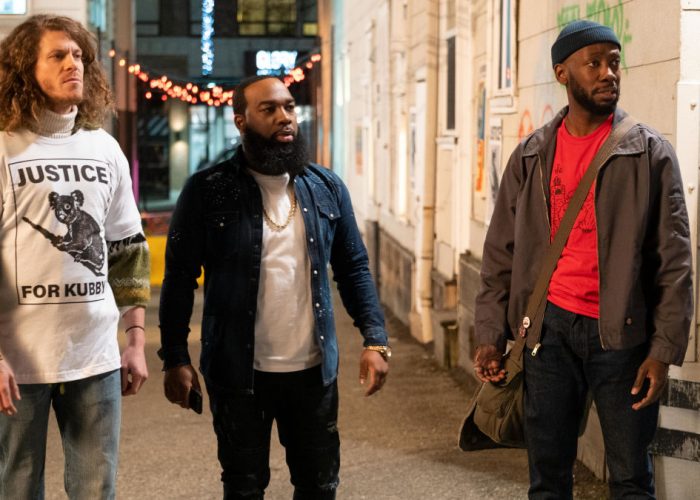
Much like Knight, Keef (Lamorne Morris), is the creator of a popular, intentionally ineffectual comic stripToast N Butterwho is on the cusp of achieving mainstream success in gentrified San Francisco. His modus operandi can be summarized in three words: Keep it light. Keefs affable, controversy-free presence and milquetoast artistry allow him the kind of opportunities that, for many Black creatives, are only accessible via some form of assimilation. So when the cartoonist is approached by a local, socially conscious journalist named Ayana (Sasheer Zamata) who assigns deeper political meaning to his work, Keef immediately rebuffs the notion: Why is it that as people of color were always having to stand for something? Considering that this feckless way of thinking has earned him a syndication deal and local fame, he isnt given a good enough reason to reconsider this stance.
That all changes when he is violently accosted by the police in a case of unapologetic racial profiling. Shaken, he not only begins to question his former ideals of a post-racial existence, but he also witnesses his trauma manifest in talking malt liquor bottles (voiced by Eddie Griffin and Nicole Byer), an instigating trash can (voiced by Cedric The Entertainer), and a radicalized talking marker (voiced by J.B. Smoove). As soon as he begins to even slightly unpack the many ways that racism affects how he is viewed and treated, his friends and roommates Clovis (T-Murph) and Gunther (Blake Anderson) inform him with great trepidation that he is now woke, a level of awareness that he is unable to escape even when it means tanking his one opportunity at greatness and comfortable living. The rest of the eight-episode season follows Keef as he begins to reevaluate his relationship with his identity and how he is meant to live and create with this new, imposing clarity.
While this all-consuming transition from protective detachment to crushing awareness is new for Keef, it doesnt really make for a fresh viewing experience for an audience that is currently witnessing a real-life, modern-day civil rights movement right outside of its window. Neither Keef nor those around him offer any intriguing insights, the jokes are too well-worn to inspire any real laughter, and Keefs journey can often feel more like casual meandering as the season trudges through moments that focus too intently on commonly explored microaggressions. For instance, in the episode Gig E. Smalls, Keef discovers that he is the only Black person at a party packed with WASPy art lovers. Within moments, he is subjected to tired pandering as attendees approach him with condescending bits about O.J. Simpson, Wakanda, reparations, and one dusted off Sunken Place reference. Its 2020. Have we not moved beyond any of this?
Whats more, the writing zooms right past opportunities to dig beyond the surface and examine how the white people in Keefs immediate circle either inform or hinder his burgeoning understanding of Blackness and white privilege. Then again, that would likely require the creative team to reckon with its choice to position his white roommate, Gunther, and his love interest, Adrienne (Rose McIver), as the more prominent voices of reason in a show that is meant to somewhat interrogate white supremacy. This wouldnt register as a potential issue if the Black characters were fleshed out beyond their caricature-like personas, but they arent until the season nearly reaches its end. Morris isnt given anything too meaty to chew on until the finale, when he faces the cop who brutalized him in a highly coordinated PR stunt to benefit the offending police department. Morris briefly comes to life in a cathartic moment of pure nerve. Until then, he and the rest of the cast are tasked with making do with the light material theyre given while trying to cultivate some semblance of friendly chemistry among themselves.
Wokes execution of surreal imagery is also a miss due largely to stilted dialogue and tame usage; the animated portions of the show read like an afterthought and do nothing to challenge or propel Keefs understanding of race or his own trauma. Theyre largely meant to signal his deteriorating mental health without adding anything. This rings as especially bereft during a time when Lovecraft Countryis creatively illustrating the horrors of a sundown town with grotesque monsters, and the Netflix film See You Yesterdayuses time travel to address the hopelessness that can often underline Black Americas violent relationship with law enforcement. Instead, were left with a pair of heckling convenience store bottles extolling dated satire about the Black communitys connection with malt liquor.
In the end, its difficult to deduce who exactly Woke is for. It offers nothing new for those who shoulder the weight of racism daily, nor does it provide gilded insight for those who are just beginning to understand how race is still a hot-button issue in America. What Woke does manage to get right is the idea that gaining an understanding of how systemic racism shapes our existence is a lengthy process. If the finale is meant to lay the groundwork for Keefs deeper purpose in the fight for equality, then theres a real chance that next season will be more illuminating than the first. But Wokes creators have to be ready to have deeper, far more interesting conversations that extend beyond overdone Get Outjokes and trash-talking garbage bins.read more
Hulu’s Woke takes a sleepy approach to race in America